Yoga Certification Course in India
India is the birthplace of yoga, and for thousands of students every year, it is still the place where a personal practice turns into a profession. If you have been dreaming of teaching yoga, deepening your own sadhana, or simply learning the tradition from the source, enrolling in a Yoga Certification Course in India is one of the most meaningful decisions you can make. In this guide, we walk you through what these courses involve, how to choose the right one, what a typical day looks like, and why Agastya Yoga Goa has become a trusted name for yoga teacher training on India’s sunny west coast.
Why Study Yoga in India?
Yoga is far more than physical postures. Its roots lie in philosophy, breathwork, meditation, anatomy of the subtle body, and a way of living that has been refined over thousands of years. Studying in India lets you experience all of this in its natural context.
- Authentic lineage: Learn from teachers who have practiced and taught the traditional systems of Hatha, Ashtanga, and Vinyasa for years.
- Immersive environment: Training residentially means your days revolve around practice, study, rest, and reflection, with no daily-life distractions.
- Global recognition: Courses registered with Yoga Alliance allow graduates to teach in studios, gyms, retreats, and online platforms worldwide.
- Cultural depth: Chanting, Ayurvedic food, philosophy discussions, and community living shape you as a person as much as a teacher.
- Value for money: Compared with Europe, the USA, or Australia, training in India offers high-quality instruction with accommodation and meals at a fraction of the cost.
Yoga Certification Course in India
Why Goa Is a Perfect Place to Train
Goa offers something few other destinations do: serious yoga education in a calm, nature-rich coastal setting. Palm groves, quiet beaches, fresh seafood and vegetarian cuisine, and a relaxed rhythm of life make it easier to slow down and absorb what you are learning. The region is also well connected by air and road, which makes travel simple for international and domestic students alike.
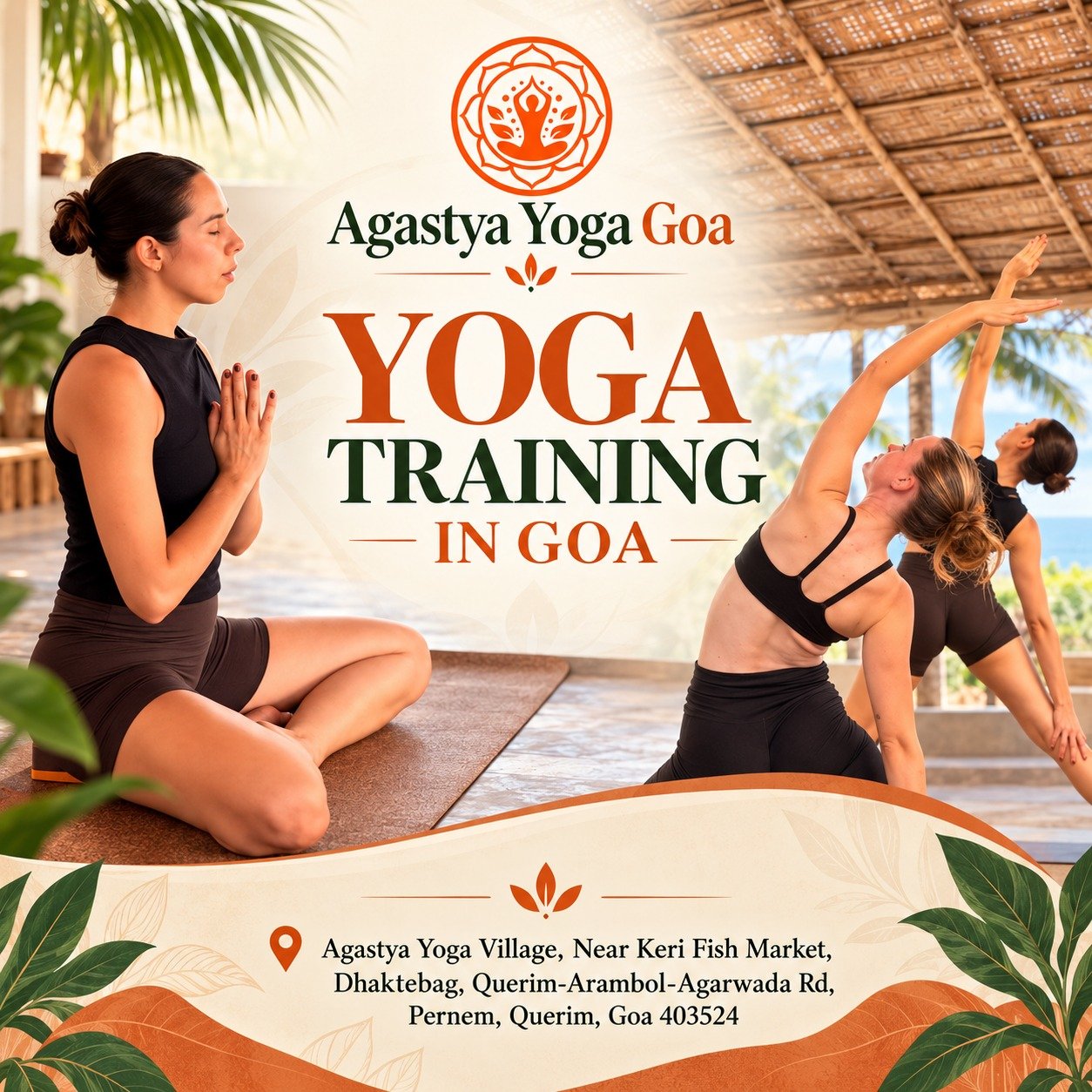
At Agastya Yoga Goa, our shala is designed to support concentration and well-being. Students practice in a peaceful environment, enjoy nature hikes with trusted guides, and recover with nourishing meals between sessions.
Types of Yoga Teacher Training Programs at Agastya Yoga Goa
We offer progressive levels of training so that beginners and experienced practitioners can each find the right starting point. The table below gives a quick overview. Dates and fees are updated regularly, so please confirm current details on our website, agastyayoga.com.
| Program | Typical Duration | Best For | What You Gain |
|---|---|---|---|
| 100-Hour Yoga Teacher Training | About 11 days | Beginners, short-stay students, those testing the path | Strong foundation in asana, pranayama, and basic teaching skills |
| 200-Hour Yoga Teacher Training | About 22 days | Aspiring teachers and committed practitioners | Internationally recognized certification and the confidence to lead classes |
| 300-Hour Advanced Yoga Teacher Training | About 27 days | Certified teachers wanting depth and mastery | Advanced sequencing, adjustments, philosophy, and refined teaching methodology |
Our programs draw from Ashtanga, Vinyasa, and Hatha traditions, giving you a well-rounded toolkit rather than a single narrow style.
What You Will Learn
A high-quality curriculum balances practice and theory. Across our courses, students typically study the following areas.
- Asana practice and alignment: Foundational and intermediate postures, safe alignment principles, modifications, and use of props.
- Pranayama and breath science: Techniques for energy regulation, focus, and calm.
- Meditation and relaxation: Guided methods, mantra, and the foundations of mindful awareness.
- Yoga philosophy: The Yoga Sutras, the eight limbs of yoga, and practical ways to apply ancient teachings to modern life.
- Anatomy and physiology: Understanding the body, common injuries, and how to teach safely.
- Teaching methodology: Class design, sequencing, voice and cueing, hands-on adjustments, and practice teaching with feedback.
- Ayurveda and lifestyle: Introduction to doshas, daily routines, and food as medicine.
Yoga Certification Course in India
A Typical Day During Training
The rhythm of training is disciplined yet nurturing. While schedules can vary by course, a day often looks like this:
| Time | Activity |
|---|---|
| Early morning | Pranayama, kriya, and meditation |
| Morning | Asana practice (Ashtanga, Vinyasa, or Hatha) |
| Late morning | Breakfast and rest |
| Midday | Philosophy, anatomy, or Ayurveda lectures |
| Afternoon | Teaching methodology and practice teaching |
| Evening | Light restorative practice or meditation |
| Night | Dinner, self-study, and early sleep |
Most programs include a weekly rest day, giving you time to explore nearby beaches, markets, and nature trails.
What Is Included in Your Course
Students choose Agastya Yoga Goa because the experience is complete and thoughtfully organized. Depending on the program, inclusions can cover:
- Accommodation for the duration of the course
- Three nutritious meals a day, with water, tea, and coffee served throughout the day
- Course manual and study materials
- Yoga mats, blocks, straps, and bolsters
- Ayurvedic consultation
- Nature hikes and group excursions
- Wi-Fi connection
- Pre- and post-course support from our team
- Certificate on successful completion, with Yoga Alliance registration
Please check the specific program page for the exact list, as inclusions may differ by course and season.
How to Choose the Right Yoga Teacher Training Course
With so many options available, it helps to ask the right questions before you book. Use this checklist.
| What to Check | Why It Matters |
|---|---|
| Yoga Alliance registration | Ensures your certificate is accepted by studios worldwide |
| Teacher experience | Experienced, lineage-trained teachers shape the quality of your learning |
| Class size | Smaller groups mean more personal attention and feedback |
| Curriculum balance | Look for a healthy mix of practice, philosophy, anatomy, and teaching skills |
| Student reviews | Honest feedback from past students reveals the real experience |
| Food and accommodation | Comfortable, clean, and nourishing surroundings support deeper learning |
| Transparency on fees | Clear inclusions and policies avoid surprises later |
Students who have trained with Agastya Yoga Goa have rated their experience very highly on third-party platforms such as BookRetreats, which reflects our focus on teaching quality, care, and a supportive community.
Career Opportunities After Certification
Completing a recognized program opens many doors. Graduates go on to:
- Teach at yoga studios, wellness centers, gyms, and corporate programs
- Lead retreats and workshops in India and abroad
- Offer private sessions and online classes
- Continue to advanced studies such as the 300-hour level and specialized trainings
- Build wellness-based businesses or integrate yoga into existing professions such as physiotherapy, counseling, and fitness coaching
Even if you do not plan to teach professionally, the training deepens self-awareness, discipline, and physical well-being in lasting ways.
Who Can Join?
You do not need to be an advanced practitioner or have a flexible body to begin. A basic interest in yoga, a willingness to learn, and a respectful attitude are enough for the 100-hour and 200-hour programs. The 300-hour advanced program is best suited to those who have already completed a 200-hour training or have solid teaching experience.
Frequently Asked Questions (FAQs)
1. How long does yoga teacher training take at Agastya Yoga Goa?
Duration depends on the level. Our 100-hour program runs for around 11 days, the 200-hour program for around 22 days, and the 300-hour program for around 27 days. Exact schedules are published on our website.
2. Is the certificate internationally recognized?
Yes. Our teacher training programs are registered with Yoga Alliance, so graduates can teach in many countries. Always verify the latest registration details on the Yoga Alliance directory and on agastyayoga.com before enrolling.
3. Do I need prior yoga experience?
For the 100-hour and 200-hour courses, prior experience is helpful but not mandatory. Beginners with a sincere commitment are welcome. The 300-hour course generally requires a completed 200-hour certification.
4. What styles of yoga will I learn?
You will study Ashtanga, Vinyasa, and Hatha traditions, along with pranayama, meditation, and yoga philosophy.
5. What is the best time of year to train in Goa?
The most comfortable months are generally November to March, when the weather is dry and pleasant. Many of our programs run across the year, so you can choose dates that suit you. Please check our current schedule for availability.
6. Are meals and accommodation included?
Yes, most programs include accommodation and three daily meals, along with water, tea, and coffee. Please review the inclusions listed for your chosen course.
7. Is the food vegetarian?
Meals are healthy, balanced, and prepared in line with yogic and Ayurvedic principles. If you have dietary needs or allergies, let our team know at the time of booking.
8. Can I learn yoga online instead of in person?
Online trainings exist, but residential training offers deeper guidance, hands-on correction, and a supportive community. Many students find that being fully immersed in the environment accelerates their growth.
9. How do I book my spot?
You can reserve your place through our website, agastyayoga.com, or through trusted booking partners. A small deposit usually confirms your seat, with the balance payable as per our policy.
10. What should I pack?
Bring comfortable yoga clothing, a light shawl, a reusable water bottle, a notebook, sunscreen, mosquito repellent, and any personal medication. Yoga mats and props are provided in most programs.
11. Is travel and visa support available?
Our team can guide you on airport transfers and general travel planning. International students should apply for the correct Indian visa well in advance, and check the latest official requirements before travel.
12. Is it safe for solo and female travelers?
Goa is a popular destination for solo travelers, and our shala maintains a welcoming, respectful environment. As with any travel, basic precautions and local awareness are always recommended.